

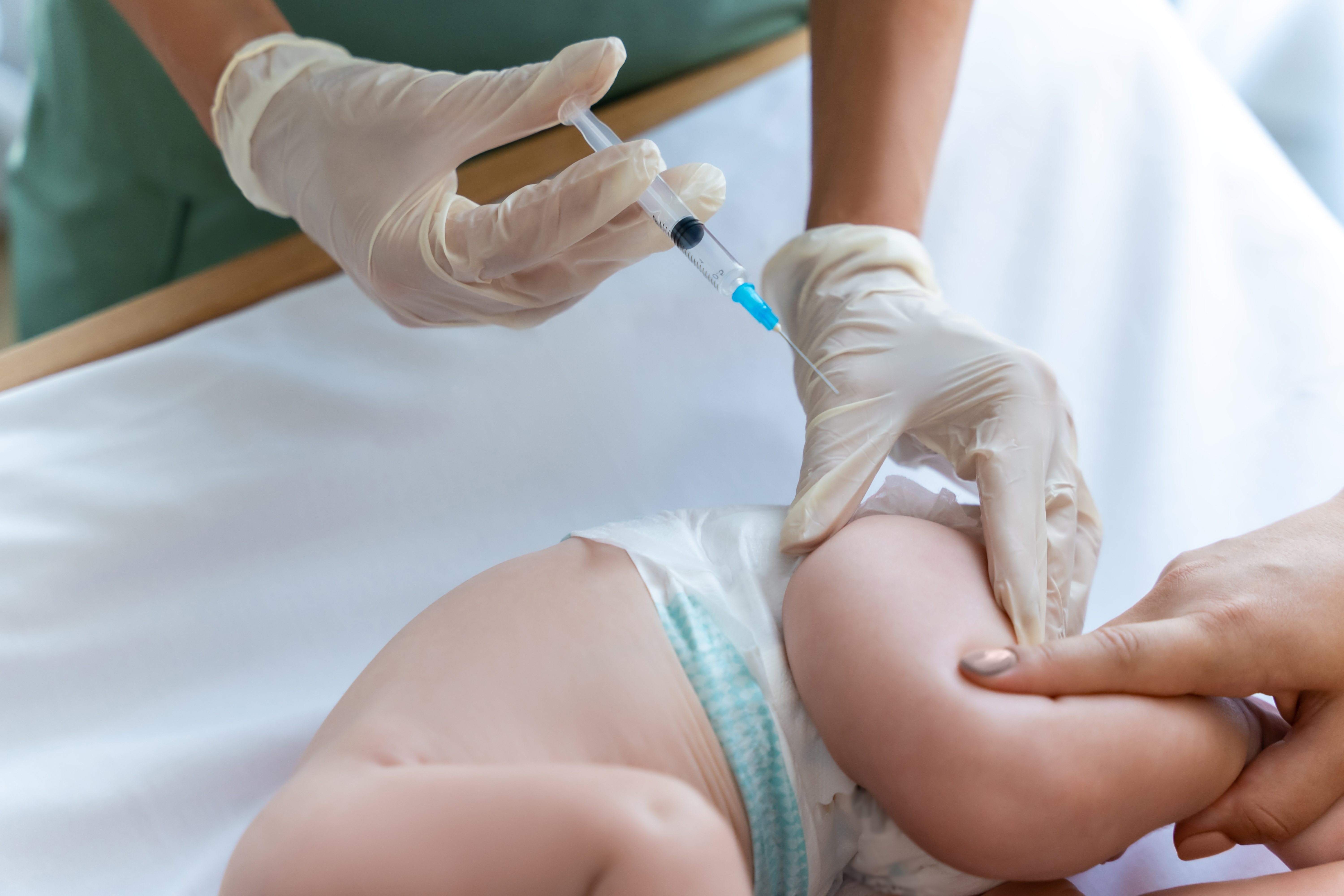
Acellular Pertussis Vaccines in Pediatrics: Where They Fit in Prevention Strategy
In this article
Summary
Key points
- Pertussis continues to pose a significant pediatric burden, with ~24.1 million cases and ~160,700 deaths annually in children <5 years, particularly affecting infants2
- Transmission dynamics have shifted, with adults and adolescents increasingly serving as reservoirs, raising infection risk in infants1
- Acellular pertussis vaccines include up to 5 antigens (PT, FHA, PRN, FIM2/3), targeting key virulence factors for broader immune coverage2,4
- Vaccine effectiveness in fully immunized children is high ~93% (95% CI: 91–94), improving to ~96% (95% CI: 95–97) with booster dosing, supporting sustained protection6
- Immunity wanes over time, with increased susceptibility ≥3 years after last dose in younger children, highlighting the importance of booster doses6
- Multi-component acellular vaccines (≥3 antigens) provide higher efficacy ~84–85% (range across studies) compared to 1–2 antigen formulations 59–78% (range across studies)7
- Acellular vaccines are associated with lower rates of local and systemic reactogenicity, improving tolerability versus whole-cell vaccines7,9
- Acellular pertussis vaccines are integral to pediatric immunization strategies, balancing strong efficacy with an improved safety profile3,4,7
Pertussis (whooping cough) is a respiratory infection caused by Bordetella pertussis, characterized by paroxysmal coughing followed by a prolonged crowing inspiratory effort. The disease primarily affects children, with infants experiencing the most severe infections, potentially leading to pulmonary hypertension, heart failure, and encephalitis.¹ Globally, an estimated 24.1 million cases and 160,700 deaths occur among children under 5 years, highlighting a substantial disease burden.²
Despite widespread immunization, pertussis persists as a public health challenge, partly due to a shift in transmission from child-to-child to adult-to-child, leaving unvaccinated or incompletely immunized infants particularly vulnerable.¹ Vaccination remains the most effective preventive strategy.³ Two vaccine types exist: whole-cell vaccines containing killed organisms and acellular vaccines composed of up to five purified B. pertussis antigens. These include pertussis toxoid (PT) and adhesion proteins such as filamentous haemagglutinin (FHA), pertactin (PRN), and fimbriae types 2 and 3 (FIM2/3), selected based on their roles in disease pathogenesis and as key immunological targets.²,⁴ Head-to-head studies show favorable efficacy and safety profiles of acellular vaccines.⁴
Pediatric Vaccination Strategies5
As per the Indian Academy of Pediatrics–Advisory Committee on Vaccines and Immunization Practices (IAP-ACVIP) immunisation schedule, pertussis-containing vaccines are administered at the following ages*:
Age |
Vaccine |
Schedule / Recommendation |
6 weeks |
DTwP / DTaP |
Dose 1 |
10 weeks |
DTwP / DTaP |
Dose 2 |
14 weeks |
DTwP / DTaP |
Dose 3 |
16–18 months |
DTwP / DTaP |
Booster 1 |
4–6 years |
DTwP / DTaP |
Booster 2 |
Adapted from Rao MIS et al., Indian Pediatr, 2024.
* (DTwP = Diphtheria, Tetanus, Whole-cell Pertussis; DTaP = Diphtheria, Tetanus, Acellular Pertussis; Tdap = Tetanus, Diphtheria, Acellular Pertussis; Td = Tetanus, Diphtheria)
Effectiveness of Acellular Pertussis Vaccines
A retrospective cohort study of 469,982 children classified DTaP vaccination status as unvaccinated, under vaccinated, fully vaccinated, or fully vaccinated plus 1 dose.6 Vaccine effectiveness (VE) varied by age, dose completion, and time since last vaccination. Fully vaccinated children had high protection [VE 93% (95% CI: 91% – 94 %)], further improved in those receiving an additional DTaP dose [VE 96% (95% CI: 95% – 97%)]. Risk of pertussis increased with time elapsed since the last dose, particularly ≥3 years in children 19–<84 months and ≥6 years in children 84–132 months.6
Multi-Component Vaccine Efficacy
Comparisons across studies show that acellular vaccines containing three or more antigens are more effective than one- or two-component vaccines in preventing classical whooping cough and milder pertussis illness.7 A systematic review reported 84%–85% efficacy against typical whooping cough and 71%–78% against mild disease for multi-component vaccines, versus 59%–78% and 41%–58% for one- and two-component vaccines. Multi-component acellular vaccines outperform lower-efficacy whole-cell vaccines, though they may be slightly less effective than the highest-efficacy whole-cell formulations.7,8 These findings reinforce the role of multi-component acellular vaccines in routine pediatric immunization programs.
Age-Related Immune Responses in Children
A phase IV study in Finland, the Netherlands, and the UK evaluated immune responses to a three-component acellular pertussis vaccine across four age groups: children (7–10 years), adolescents (11–15 years), young adults (20–34 years), and older adults (60–70 years). The findings presented here pertain to the children’s cohort (n = 109).8 Serum IgG and IgA to pertussis antigens were measured at day 0, 28, and 1 year, with pertussis toxin IgG at day 28 as the primary outcome. In children, geometric mean concentrations (GMCs) of pertussis toxin IgG at day 28 were 147 IU/ml (95% CI: 120–181). IgG levels increased by day 28 for all antigens but declined by 1 year, while IgA responses were also measured throughout the study period.8
Safety Profile
Acellular vaccines have a well-established safety advantage over whole-cell vaccines, which are associated with higher rates of local reactions, systemic symptoms, and severe adverse events including hypotonic–hyporesponsive episodes.9 A Cochrane review confirmed that systemic and local adverse events are significantly less common with acellular vaccines in both primary and booster series, supporting their safe use in pediatric populations.7
Conclusion
Pertussis (whooping cough), caused by Bordetella pertussis, remains a significant pediatric respiratory infection with a substantial global burden, particularly among infants.¹,² Vaccination is the best way to protect against pertussis.³ Acellular pertussis vaccines, containing purified antigens such as pertussis toxoid (PT), filamentous hemagglutinin (FHA), pertactin (PRN), and fimbriae (FIM2/3), demonstrate strong efficacy, particularly with multi-component formulations, along with an improved safety profile compared to whole-cell vaccines.²,⁴,⁷ Sustained protection is observed in fully vaccinated children, although the risk of pertussis increases with time since the last dose.⁶ Overall, acellular pertussis vaccines play a central role in pediatric immunization programs, offering effective protection with well-established tolerability profile .³,⁴
Key Safety Information10
Contraindications:
Hypersensitivity to any active substance or excipient or formaldehyde, neomycin and polymyxin. Hypersensitivity after previous administration of diphtheria, tetanus, pertussis, hepatitis B, polio or Hib vaccines. Encephalopathy of unknown aetiology, occurring within 7 days following previous vaccination with pertussis containing vaccine. Postpone administration in acute severe febrile illness.
Special warnings and precautions:
Carefully consider decision to give further doses if: temperature of ≥40.0°C (<48 hours of vaccination), not due to another identifiable cause; collapse or shock-like state (<48 hours of vaccination); persistent, inconsolable crying lasting ≥3 hours (<48 hours of vaccination); convulsions with or without fever, (<3 days of vaccination). Administer with caution in thrombocytopenia or a bleeding disorder. Do not administer intravascularly or intradermally. Rate of febrile reactions higher when co-administered with pneumococcal conjugate vaccine, orwith measles-mumps-rubella-varicella vaccine; reactions mostly moderate (less than or equal to 39°C) and transient. Increased reporting rates of convulsions (with or without fever) and hypotonic hyporesponsive episode (HHE) were observed with concomitant administration of INFANRIX HEXA and Prevenar 13.
Special populations:
HIV infection not a contraindication. Consider potential risk of apnoea and need for respiratory monitoring for 48-72h when administering primary immunisation series to very preterm infants (born ≤28 weeks of gestation) and particularly if history of respiratory immaturity.
Pregnancy and Lactation:
INFANRIX HEXA is not intended for use in adults, adequate human data on use during pregnancy or lactation and adequate animal reproduction studies are not available.
Undesirable effects:
Very Common- Appetite lost, crying abnormal, irritability, restlessness, somnolence, fever ≥38°C, local swelling at the injection site (≤50 mm), pain, redness.
For the use only of a Registered Medical Practitioner or a Hospital or a Laboratory
References
1. Guo S, Zhu Y, Guo Q, Wan C. Severe pertussis in infants: a scoping review. Ann Med. 2024;56(1):2352606. doi:10.1080/07853890.2024.2352606
2. World Health Organization. Pertussis: WHO Surveillance Standards. WHO; 2018. Accessed May 13, 2026. https://www.who.int/docs/default-source/immunization/vpd_surveillance/vpd-surveillance-standards-publication/b-w/who-surveillancevaccinepreventable-16-pertussis-bw-r2.pdf
3. Centers for Disease Control and Prevention. Whooping Cough (Pertussis) and the Importance of Childhood Vaccination. CDC; 2025. Accessed May 13, 2026. https://www.cdc.gov/vaccines/resources/childhood-vaccination/CDC-Childhood-Vax-Disease-Factsheet-Whooping-Cough_508.pdf
4. Dewan KK, Linz B, DeRocco SE, Harvill ET. Acellular Pertussis Vaccine Components: Today and Tomorrow. Vaccines (Basel). 2020;8(2):217. Published 2020 May 13. doi:10.3390/vaccines8020217
5. Rao MIS, Kasi SG, Dhir SK, Wadhwa A, Rajsekhar B, Kumar CM, et al. Indian Academy of Pediatrics (IAP) Advisory Committee on Vaccines and Immunization Practices (ACVIP): Recommended Immunization Schedule (2023) and update on immunization for children aged 0 through 18 years. Indian Pediatr. Indian Pediatr. 2024. doi:10.1007/s13312-024-3104-5
6. Zerbo O, Bartlett J, Goddard K, Fireman B, Lewis E, Klein NP. Acellular Pertussis Vaccine Effectiveness Over Time. Pediatrics. 2019;144(1):e20183466. doi:10.1542/peds.2018-3466
7. Zhang L, Prietsch SO, Axelsson I, Halperin SA. Acellular vaccines for preventing whooping cough in children. Cochrane Database Syst Rev. 2014;2014(9):CD001478. Published 2014 Sep 17. doi:10.1002/14651858.CD001478.pub6
8. Versteegen P, Valente Pinto M, Barkoff AM, et al. Responses to an acellular pertussis booster vaccination in children, adolescents, and young and older adults: A collaborative study in Finland, the Netherlands, and the United Kingdom. EBioMedicine. 2021;65:103247. doi:10.1016/j.ebiom.2021.103247.
9. Greco D, Salmaso S, Mastrantonio P, et al. A Controlled Trial of Two Acellular Vaccines and One Whole‑Cell Vaccine Against Pertussis. N Engl J Med. 1996;334(6):341‑349. doi:10.1056/NEJM199602083340601.
10. Infanrix Hexa, Abbreviated Prescribing Information, Version: IFX-H/PI/IN/2025/01 updated on 09-Dec-2025.. https://india-pharma.gsk.com/media/a3hbdio3/infanrixhexa.pdf
GSK is not responsible for the third-party website content
Disclaimer
For the use only of a registered medical practitioner or a hospital or a laboratory. Trademarks are owned by or licensed to the GSK group of companies. Refer to full prescribing information before use. Registered medical practitioners can refer company website http://india-pharma.gsk.com/en-in/products/prescribing-information/ for full Product Information. Please report adverse events with any GSK product to the company at [email protected] ©2026 GSK group of companies or its licensor. For more information, please contact: GlaxoSmithKline Pharmaceuticals Limited, Dr. Annie Besant Road, Worli, Mumbai – 400030 (India).
CL Code: PM-IN-INH-WCNT-260014 | DOP: June 2026
For more information, please refer the following link
https://india-pharma.gsk.com/media/a3hbdio3/infanrixhexa.pdf
For Indian Healthcare Professionals Only
Key Safety Information
Contraindications
Hypersensitivity to any active substance or excipient or formaldehyde, neomycin and polymyxin. Hypersensitivity after previous administration of diphtheria, tetanus, pertussis, hepatitis B, polio or Hib vaccines. Encephalopathy of unknown aetiology, occurring within 7 days following previous vaccination with pertussis containing vaccine. Postpone administration in acute severe febrile illness.
Special warnings and precautions
Carefully consider decision to give further doses if: temperature of ≥40.0°C (<48 hours of vaccination), not due to another identifiable cause; collapse or shock-like state (<48 hours of vaccination); persistent, inconsolable crying lasting ≥3 hours (<48 hours of vaccination); convulsions with or without fever, (<3 days of vaccination). Administer with caution in thrombocytopenia or a bleeding disorder. Do not administer intravascularly or intradermally. Rate of febrile reactions higher when co-administered with pneumococcal conjugate vaccine, or with measles-mumps-rubella-varicella vaccine; reactions mostly moderate (less than or equal to 39°C) and transient. Increased reporting rates of convulsions (with or without fever) and hypotonic hyporesponsive episode (HHE) were observed with concomitant administration of INFANRIX HEXA and Prevenar 13.
Special populations
HIV infection not a contraindication. Consider potential risk of apnoea and need for respiratory monitoring for 48-72h when administering primary immunisation series to very preterm infants (born ≤28 weeks of gestation) and particularly if history of respiratory immaturity.
Pregnancy and Lactation
INFANRIX HEXA is not intended for use in adults, adequate human data on use during pregnancy or lactation and adequate animal reproduction studies are not available.
Undesirable effects
Very Common- Appetite lost, crying abnormal, irritability, restlessness, somnolence, fever ≥38°C, local swelling at the injection site (≤50 mm), pain, redness
For the use only of a Registered Medical Practitioner or a Hospital or a Laboratory
Abbreviated Prescribing information of INFANRIX HEXA [Diphtheria, tetanus, pertussis (acellular component), hepatitis B (rDNA), poliomyelitis (inactivated) and Haemophilus type b conjugate vaccine (adsorbed) Ph. Eur.]
ACTIVE INGREDIENT: Each 0.5 ml dose of reconstituted vaccine contains (i) Diphtheria toxoid ≥ 30 IU, (ii) Tetanus toxoid ≥ 40 IU, (iii) Bordetella pertussis antigens (Pertussis toxoid 25mcg, Filamentous Haemagglutinin 25 mcg, Pertactin 8 mcg), (iv) Hepatitis B surface antigen 10 mcg, (v) Inactivated Poliovirus [type 1 (Mahoney strain) 40 D-antigen unit, type 2 (MEF-1 strain) 8 D-antigen unit, type 3 (Saukett strain) 32 D-antigen unit), (vi) Haemophilus influenzae type b polysaccharide (polyribosylribitol phosphate, PRP) 10 mcg conjugated to tetanus toxoid as carrier protein (approximately 25 mcg).
INDICATION: Primary and booster vaccination of infants against diphtheria, tetanus, pertussis, hepatitis B, poliomyelitis and disease caused by Haemophilus influenzae type b.
DOSAGE AND ADMINISTRATION: Posology: The primary vaccination schedule should be administered according to official recommendations. Full-term infants or Preterm infants (≥24 weeks gestational age): 3-dose primary vaccination: interval of ≥1 month between primary doses. Booster dose ≥6 months after last priming dose; preferably ≤18 months of age. 2-dose primary vaccination: interval of ≥2 month between primary doses. Booster dose ≥6 months after last priming dose; preferably between 11-13 months of age. Administered according to official recommendations. The Expanded Program on Immunisation schedule (at 6, 10, 14 weeks of age) may only be used if hepatitis B vaccine given at birth. Safety and efficacy not been established in children > 36 months of age. Method of Administration: Deep intramuscular injection, preferably at alternating sites for subsequent injections.
CONTRA-INDICATIONS: Hypersensitivity to any active substance or excipient or formaldehyde, neomycin and polymyxin. Hypersensitivity after previous administration of diphtheria, tetanus, pertussis, hepatitis B, polio or Hib vaccines. Encephalopathy of unknown aetiology, occurring within 7 days following previous vaccination with pertussis containing vaccine. Postpone administration in acute severe febrile illness.
SPECIAL WARNINGS and SPECIAL PRECAUTIONS: Precede vaccination by review of medical history and clinical examination. Protective immune response may not be elicited in all vaccinees. Will not prevent disease caused by pathogens other than Corynebacterium diphtheriae, Clostridium tetani, Bordetella pertussis, hepatitis B virus, poliovirus or Haemophilus influenzae type b. However, Hepatitis D can be expected to be prevent. If any following events have occurred in temporal relation to receipt of pertussis-containing vaccine, carefully considered decision to give further doses of pertussis-containing vaccines: temperature of ≥40.0°C (<48 hours of vaccination), not due to another identifiable cause; collapse or shock-like state (<48 hours of vaccination); persistent, inconsolable crying lasting ≥3 hours (<48 hours of vaccination); convulsions with or without fever, (<3 days of vaccination). Appropriate medical treatment and supervision be available in case of rare anaphylactic event. Carefully weigh risk-benefit of immunising or deferring vaccination in infant or child suffering from new onset or progression of severe neurological disorder. Administered with caution in thrombocytopenia or a bleeding disorder. Do not administer intravascularly or intradermally. History of febrile convulsions, family history of convulsions or Sudden Infant Death Syndrome (SIDS) not a contraindication for use. Vaccinees with history of febrile convulsions should be closely followed up. Rate of febrile reactions higher when co-administered with pneumococcal conjugate vaccine, or with measles-mumps-rubella-varicella vaccine; reactions mostly moderate (less than or equal to 39°C) and transient. Increased reporting rates of convulsions (with or without fever) and hypotonic hyporesponsive episode (HHE) were observed with concomitant administration of INFANRIX HEXA and Prevenar 13. Antipyretic treatment should be initiated according to local treatment guidelines. Special populations: HIV infection not a contraindication. Expected immunological response may not be obtained in immunosuppressed patients. Can be given to preterm infants; however lower immune response been observed for some antigens. Consider potential risk of apnoea and need for respiratory monitoring for 48-72h when administering primary immunisation series to very preterm infants (born ≤28 weeks of gestation) and particularly if history of respiratory immaturity. Benefit of vaccination is high; vaccination should not be withheld or delayed. Interference with laboratory testing: Hib capsular polysaccharide antigen excreted in urine, positive urine test observed within 1-2 weeks. Interaction with other medicinal products and other forms of interaction: INFANRIX HEXA can be given concomitantly with pneumococcal conjugate vaccine (PCV7, PCV10 and PCV13), meningococcal serogroup C conjugate vaccine (CRM197 and TT conjugates), meningococcal serogroups A, C, W-135 and Y conjugate vaccine (TT conjugate), oral rotavirus vaccine and measles-mumps-rubella-varicella (MMRV) vaccine. Pregnancy and Lactation: INFANRIX HEXA is not intended for use in adults, adequate human data on use during pregnancy or lactation and adequate animal reproduction studies are not available.
ADVERSE EFFECTS: The following drug-related adverse reactions were reported in clinical studies (data from more than 16,000 subjects) and during post-marketing surveillance.
Very common (≥1/10): Appetite lost, crying abnormal, irritability, restlessness, somnolence, fever ≥38°C, local swelling at the injection site (≤50 mm), pain, redness.
Common (≥1/100 to <1/10): Nervousness, diarrhoea, vomiting, fever >39.5°C, injection site reactions, including induration, local swelling at the injection site (>50 mm).
Uncommon (≥1/1,000 to <1/100): Upper respiratory tract infection, cough, diffuse swelling of the injected limb, sometimes involving the adjacent joint, fatigue.
Rare (≥1/10,000 to <1/1,000): Lymphadenopathy, thrombocytopenia, anaphylactic reactions, anaphylactoid reactions (including urticaria), allergic reactions (including pruritus), collapse or shock-like state (hypotonic-hyporesponsive episode), bronchitis, apnoea, rash, angioedema, swelling of the entire injected limb, extensive swelling reactions, injection site mass, injection site vesicles.
Very rare (<1/10,000): Appetite lost, Convulsions (with or without fever), dermatitis.
OVERDOSE: No cases of overdose reported.
Version: IFX-H/API/IN updated on 10 May 2023.
Registered medical practitioners can refer company website www.gsk-india.com/product-prescribing-information.aspx for full Product Information.
Please report adverse events with any GSK product to the company at [email protected]
For the use only of a registered medical practitioner or a hospital or a laboratory. Trademarks are owned by or licensed to the GSK group of companies. Refer to full prescribing information before use. Registered medical practitioners can refer company website: india-pharma.gsk.com/en-in/products/prescribing-information/ for Full Product Information. Please report adverse events with any GSK product to the company at [email protected]. ©2026 GSK group of companies or its licensor. For more information, please contact: GlaxoSmithKline Pharmaceuticals Limited, Dr. Annie Besant Road, Worli, Mumbai – 400030 (India).