

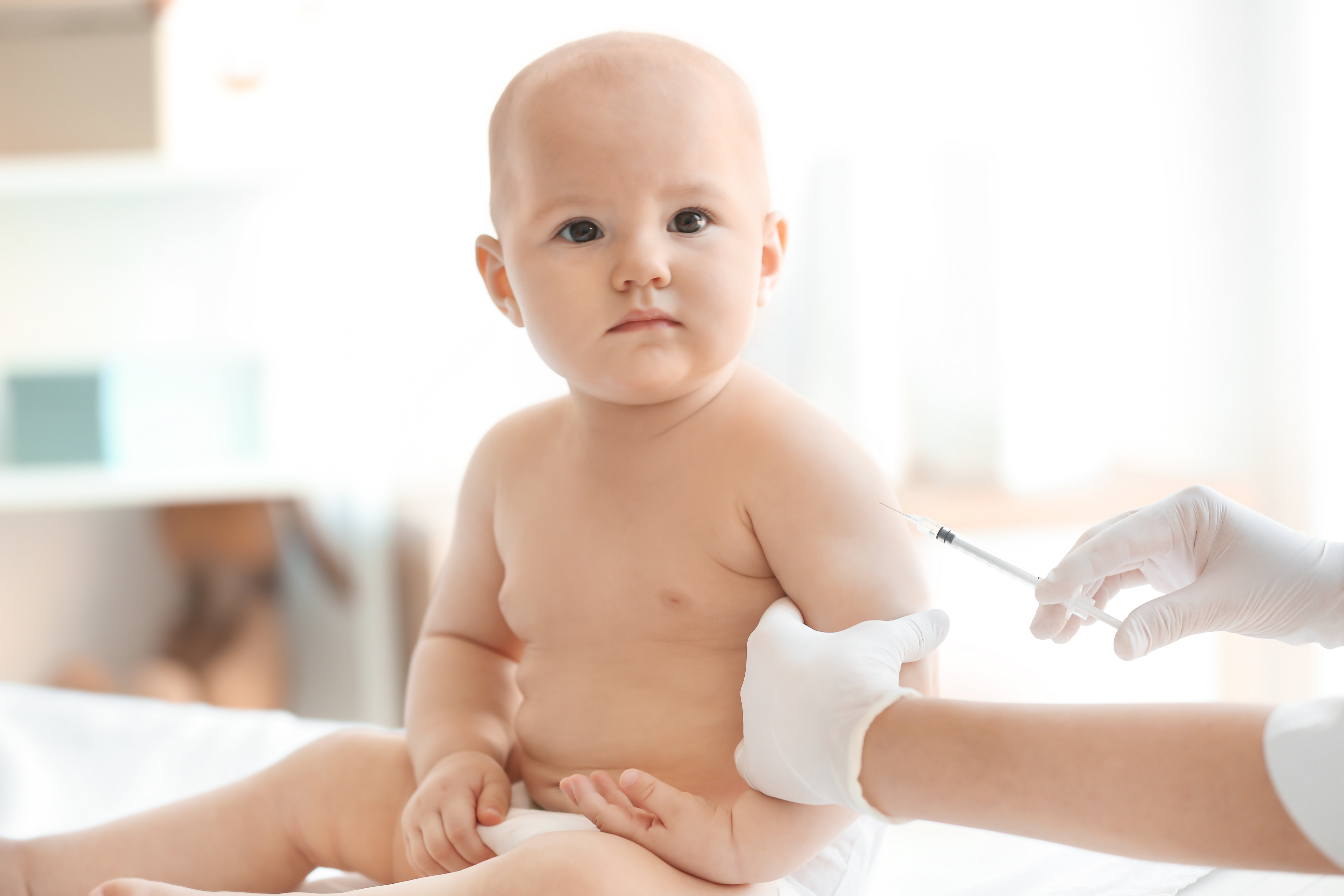
3-Dose Primary Hexavalent Schedule in Indian Infants: Immunogenicity & Safety—Key Results
In this article
Summary
Key points
- A Phase III study in 224 Indian infants demonstrated strong immunogenicity with a 3-dose hexavalent primary series3
- High seroprotection rates of 98.6–100% across all antigens were achieved one month after completion of the primary series3
- 100% seroprotection was observed for diphtheria (95% CI: 96.6–100), tetanus, and poliovirus type 1 & 2 (100%, 95% CI: 95–100) & type 3 (98.6%, 95% CI: 92.7–100), with near-complete protection for Hib (99.0–99.1%, 95% CI: 94.8–100) and hepatitis B (99–100%, 95% CI: 94.8–100 to 96.4–100)3
- Robust pertussis response with ≥97% (95% CI: ~91.6–99.4 to 96.5–100) vaccine response rates and high post-dose antibody levels (PT GMC ~107–108 EL.U/mL)3
- Comparable immunogenicity between 6–10–14 week and 2–4–6 month schedules supports flexibility in vaccination timing3
- The vaccine was well tolerated, with most adverse events limited to mild injection-site reactions (13–25%) and fever (~15%)3
- No vaccine-related serious adverse events were reported, confirming a favorable safety profile3
- Hexavalent vaccination enables protection against six diseases in a single schedule, supporting improved compliance and coverage3
Introduction
Vaccine-preventable diseases remain important contributors to childhood morbidity and mortality worldwide. Immunization is widely recognized as one of the most effective public-health interventions.1,2 The World Health Organization (WHO) estimates that vaccination prevents approximately 3.5–5 million deaths each year from diseases such as diphtheria, tetanus, pertussis, influenza, and measles.1 Similarly, the US Centers for Disease Control and Prevention (CDC) reports that around 4 million deaths worldwide are prevented annually through childhood vaccination programs, while global projections suggest that more than 50 million deaths could be averted through immunization between 2021 and 2030.2
Despite these achievements, gaps in routine immunization coverage persist. In India alone, more than 4 million infants did not receive diphtheria–tetanus–pertussis (DTP) vaccination during their first year of life.3 Combination vaccines have therefore become an important strategy in pediatric immunization programs, as reducing the number of injections and simplifying vaccination schedules can improve compliance and vaccine coverage.3
The hexavalent diphtheria–tetanus–acellular pertussis–hepatitis B–inactivated poliovirus/Haemophilus influenzae type b (DTPa-HBV-IPV/Hib) vaccine provides protection against six major childhood infections within a single formulation and has demonstrated favourable immunogenicity and well tolerated safety across multiple studies.3 In India, the Expanded Programme on Immunization, aligned with WHO recommendations, includes a three-dose primary vaccination schedule administered at 6, 10, and 14 weeks of age, followed by a booster dose in the second year of life. The present study evaluated the immunogenicity and safety of a three-dose primary series of DTPa-HBV-IPV/Hib administered to Indian infants.3
Study Design and Population3
- Design: Phase III, open-label, randomized multicenter study conducted in India
- Participants: Healthy infants aged 6–10 weeks who had received a hepatitis B vaccine within the first week of life and were born after a gestational period of ≥36 weeks.
- Sample size: 224 infants enrolled; 223 completed the study
- Vaccination schedules: Group 1: 6–10–14 weeks (n=112); Group 2: 2–4–6 months (n=112)
- Immunogenicity analysis: Conducted in the according-to-protocol cohort (n=211)
Immunogenicity Outcomes3
Overall response: One month after the third dose, seroprotection/seropositivity rates ranged from 98.6% to 100% across all vaccine antigens in both schedules.3
- Diphtheria and tetanus: 100% in both groups [95% CI: 96.5–100 (6–10–14W); [96.6–100 (2–4–6M)]
- Hib (polyribosylribitol phosphate): 99.0% (95% CI: 94.8–100; 6–10–14W) and 99.1% (95% CI: 94.9–100; 2–4–6M)
- Hepatitis B: 100% (95% CI: 96.4–100; 6–10–14W) and 99.0% (95% CI: 94.8–100; 2–4–6M)
- Poliovirus:
- Type 1: 100% in both schedules (95% CI: 96.3–100)
- Type 2: 100% in both schedules (95% CI: 95.3–100; 6–10–14W); (95.9–100; 2–4–6M)
- Type 3: 98.6% (95% CI: 92.7–100; 6–10–14W) and 100% (95% CI: 95.4–100; 2–4–6M
- Pertussis antigens: All infants were seropositive for antibodies against pertussis toxoid (PT), filamentous hemagglutinin (FHA), and pertactin (PRN); vaccine response rates ranged from 97.0%–100% (95% CI: 91.6–99.4 to 96.5–100) with the 6–10–14W schedule and 98.0%–99.0% (95% CI: 93.1–99.8 to 94.8–100) with the 2–4–6M schedule
- Marked increases in geometric mean antibody concentrations for pertussis antigens were observed after completion of the primary series.3
Antibody Responses (GMC, EL. U/mL)
Antigen |
Pre-vaccination 6–10–14W (95% CI) |
Post-dose 3 (6–10–14W) (95% CI) |
Pre-vaccination 2–4–6M (95% CI) |
Post-dose 3 (2–4–6M) (95% CI) |
Pertussis toxoid (PT) |
5.0 (4.2–6.0) |
107.3 (96.6–119.1) |
4.6 (3.8–5.6) |
108.2 (97.4–120.2) |
Filamentous haemagglutinin (FHA) |
18.7 (15.0–23.3) |
293.7 (259.4–332.6) |
20.1 (16.1–25.2) |
369.3 (335.5–406.5) |
Pertactin (PRN) |
3.4 (2.9–3.9) |
224.4 (194.2–259.3) |
3.2 (2.8–3.7) |
243.6 (213.2–278.4) |
Table developed by GSK based on data from Lalwani SK et al., 20173
GMC, geometric mean concentration; EL. U/mL, enzyme-linked immunosorbent assay units per millilitre.
Safety and Reactogenicity3
The DTPa-HBV-IPV/Hib vaccine was generally well tolerated in both vaccination schedules.3
- Solicited reactions: The most common events were injection-site pain (25.2% in the 6–10–14W group; 13.4% in the 2–4–6M group) and fever (15.3% and; 15.2%, respectively)).
- Unsolicited adverse events: Reported in 35.7% and 22.3% of infants in the 6–10–14W and 2–4–6M groups, respectively; upper respiratory tract infection was the most frequent event.
- Serious adverse events: No vaccine-related serious adverse events were reported.
Conclusion
Primary immunization with the hexavalent DTPa-HBV-IPV/Hib vaccine in Indian infants induced high seroprotection rates across all vaccine antigens, with comparable immune responses observed for both the 6–10–14 week and 2–4–6-month schedules.3 The vaccine was well tolerated, with no vaccine-related serious adverse events reported.3 These findings support the use of the hexavalent vaccine as an effective option for primary infant immunization, providing protection against six vaccine-preventable diseases within a simplified vaccination schedule.3
Key Safety Information4
Contraindications
Hypersensitivity to any active substance or excipient or formaldehyde, neomycin and polymyxin. Hypersensitivity after previous administration of diphtheria, tetanus, pertussis, hepatitis B, polio or Hib vaccines. Encephalopathy of unknown aetiology, occurring within 7 days following previous vaccination with pertussis containing vaccine. Postpone administration in acute severe febrile illness.
Special warnings and precautions
Carefully consider decision to give further doses if: temperature of ≥40.0°C (<48 hours of vaccination), not due to another identifiable cause; collapse or shock-like state (<48 hours of vaccination); persistent, inconsolable crying lasting ≥3 hours (<48 hours of vaccination); convulsions with or without fever, (<3 days of vaccination). Administer with caution in thrombocytopenia or a bleeding disorder. Do not administer intravascularly or intradermally. Rate of febrile reactions higher when co-administered with pneumococcal conjugate vaccine, or with measles-mumps-rubella-varicella vaccine; reactions mostly moderate (less than or equal to 39°C) and transient. Increased reporting rates of convulsions (with or without fever) and hypotonic hyporesponsive episode (HHE) were observed with concomitant administration of INFANRIX HEXA and Prevenar 13.
Special populations
HIV infection not a contraindication. Consider potential risk of apnoea and need for respiratory monitoring for 48-72h when administering primary immunisation series to very preterm infants (born ≤28 weeks of gestation) and particularly if history of respiratory immaturity.
Pregnancy and Lactation
INFANRIX HEXA is not intended for use in adults, adequate human data on use during pregnancy or lactation and adequate animal reproduction studies are not available.
Undesirable effects
Very Common- Appetite lost, crying abnormal, irritability, restlessness, somnolence, fever ≥38°C, local swelling at the injection site (≤50 mm), pain, redness
For the use only of a Registered Medical Practitioner or a Hospital or a Laboratory
References
- World Health Organization. Vaccines and immunization. World Health Organization. Accessed May 5, 2026. https://www.who.int/health-topics/vaccines-and-immunization/
- Centers for Disease Control and Prevention. Fast facts on global immunization. CDC. Updated July 14, 2025. Accessed May 5, 2026. https://www.cdc.gov/global-immunization/fast-facts/
- Lalwani SK, Agarkhedkar S, Sundaram B, et al. Immunogenicity and safety of 3-dose primary vaccination with combined DTPa-HBV-IPV/Hib in Indian infants. Hum Vaccin Immunother. 2017;13(1):120-127. doi:10.1080/21645515.2016.1225639
- Infanrix Prescribing Information, Version: IFX-H/PI/IN/2025/01 updated on 09 Dec 2025. https://india-pharma.gsk.com/media/a3hbdio3/infanrixhexa.pdf
GSK is not responsible for the third-party website content
Disclaimer
For the use only of a registered medical practitioner or a hospital or a laboratory. Trademarks are owned by or licensed to the GSK group of companies. Refer to full prescribing information before use. Registered medical practitioners can refer company website http://india-pharma.gsk.com/en-in/products/prescribing-information/ for full Product Information. Please report adverse events with any GSK product to the company at [email protected] ©2026 GSK group of companies or its licensor. For more information, please contact: GlaxoSmithKline Pharmaceuticals Limited, Dr. Annie Besant Road, Worli, Mumbai – 400030 (India).
CL Code: PM-IN-INH-WCNT-260016 | DOP: June 2026
For more information, please refer the following link
https://india-pharma.gsk.com/media/a3hbdio3/infanrixhexa.pdf
For Indian Healthcare Professionals Only
Key Safety Information
Contraindications
Hypersensitivity to any active substance or excipient or formaldehyde, neomycin and polymyxin. Hypersensitivity after previous administration of diphtheria, tetanus, pertussis, hepatitis B, polio or Hib vaccines. Encephalopathy of unknown aetiology, occurring within 7 days following previous vaccination with pertussis containing vaccine. Postpone administration in acute severe febrile illness.
Special warnings and precautions
Carefully consider decision to give further doses if: temperature of ≥40.0°C (<48 hours of vaccination), not due to another identifiable cause; collapse or shock-like state (<48 hours of vaccination); persistent, inconsolable crying lasting ≥3 hours (<48 hours of vaccination); convulsions with or without fever, (<3 days of vaccination). Administer with caution in thrombocytopenia or a bleeding disorder. Do not administer intravascularly or intradermally. Rate of febrile reactions higher when co-administered with pneumococcal conjugate vaccine, or with measles-mumps-rubella-varicella vaccine; reactions mostly moderate (less than or equal to 39°C) and transient. Increased reporting rates of convulsions (with or without fever) and hypotonic hyporesponsive episode (HHE) were observed with concomitant administration of INFANRIX HEXA and Prevenar 13.
Special populations
HIV infection not a contraindication. Consider potential risk of apnoea and need for respiratory monitoring for 48-72h when administering primary immunisation series to very preterm infants (born ≤28 weeks of gestation) and particularly if history of respiratory immaturity.
Pregnancy and Lactation
INFANRIX HEXA is not intended for use in adults, adequate human data on use during pregnancy or lactation and adequate animal reproduction studies are not available.
Undesirable effects
Very Common- Appetite lost, crying abnormal, irritability, restlessness, somnolence, fever ≥38°C, local swelling at the injection site (≤50 mm), pain, redness
For the use only of a Registered Medical Practitioner or a Hospital or a Laboratory
Abbreviated Prescribing information of INFANRIX HEXA [Diphtheria, tetanus, pertussis (acellular component), hepatitis B (rDNA), poliomyelitis (inactivated) and Haemophilus type b conjugate vaccine (adsorbed) Ph. Eur.]
ACTIVE INGREDIENT: Each 0.5 ml dose of reconstituted vaccine contains (i) Diphtheria toxoid ≥ 30 IU, (ii) Tetanus toxoid ≥ 40 IU, (iii) Bordetella pertussis antigens (Pertussis toxoid 25mcg, Filamentous Haemagglutinin 25 mcg, Pertactin 8 mcg), (iv) Hepatitis B surface antigen 10 mcg, (v) Inactivated Poliovirus [type 1 (Mahoney strain) 40 D-antigen unit, type 2 (MEF-1 strain) 8 D-antigen unit, type 3 (Saukett strain) 32 D-antigen unit), (vi) Haemophilus influenzae type b polysaccharide (polyribosylribitol phosphate, PRP) 10 mcg conjugated to tetanus toxoid as carrier protein (approximately 25 mcg).
INDICATION: Primary and booster vaccination of infants against diphtheria, tetanus, pertussis, hepatitis B, poliomyelitis and disease caused by Haemophilus influenzae type b.
DOSAGE AND ADMINISTRATION: Posology: The primary vaccination schedule should be administered according to official recommendations. Full-term infants or Preterm infants (≥24 weeks gestational age): 3-dose primary vaccination: interval of ≥1 month between primary doses. Booster dose ≥6 months after last priming dose; preferably ≤18 months of age. 2-dose primary vaccination: interval of ≥2 month between primary doses. Booster dose ≥6 months after last priming dose; preferably between 11-13 months of age. Administered according to official recommendations. The Expanded Program on Immunisation schedule (at 6, 10, 14 weeks of age) may only be used if hepatitis B vaccine given at birth. Safety and efficacy not been established in children > 36 months of age. Method of Administration: Deep intramuscular injection, preferably at alternating sites for subsequent injections.
CONTRA-INDICATIONS: Hypersensitivity to any active substance or excipient or formaldehyde, neomycin and polymyxin. Hypersensitivity after previous administration of diphtheria, tetanus, pertussis, hepatitis B, polio or Hib vaccines. Encephalopathy of unknown aetiology, occurring within 7 days following previous vaccination with pertussis containing vaccine. Postpone administration in acute severe febrile illness.
SPECIAL WARNINGS and SPECIAL PRECAUTIONS: Precede vaccination by review of medical history and clinical examination. Protective immune response may not be elicited in all vaccinees. Will not prevent disease caused by pathogens other than Corynebacterium diphtheriae, Clostridium tetani, Bordetella pertussis, hepatitis B virus, poliovirus or Haemophilus influenzae type b. However, Hepatitis D can be expected to be prevent. If any following events have occurred in temporal relation to receipt of pertussis-containing vaccine, carefully considered decision to give further doses of pertussis-containing vaccines: temperature of ≥40.0°C (<48 hours of vaccination), not due to another identifiable cause; collapse or shock-like state (<48 hours of vaccination); persistent, inconsolable crying lasting ≥3 hours (<48 hours of vaccination); convulsions with or without fever, (<3 days of vaccination). Appropriate medical treatment and supervision be available in case of rare anaphylactic event. Carefully weigh risk-benefit of immunising or deferring vaccination in infant or child suffering from new onset or progression of severe neurological disorder. Administered with caution in thrombocytopenia or a bleeding disorder. Do not administer intravascularly or intradermally. History of febrile convulsions, family history of convulsions or Sudden Infant Death Syndrome (SIDS) not a contraindication for use. Vaccinees with history of febrile convulsions should be closely followed up. Rate of febrile reactions higher when co-administered with pneumococcal conjugate vaccine, or with measles-mumps-rubella-varicella vaccine; reactions mostly moderate (less than or equal to 39°C) and transient. Increased reporting rates of convulsions (with or without fever) and hypotonic hyporesponsive episode (HHE) were observed with concomitant administration of INFANRIX HEXA and Prevenar 13. Antipyretic treatment should be initiated according to local treatment guidelines. Special populations: HIV infection not a contraindication. Expected immunological response may not be obtained in immunosuppressed patients. Can be given to preterm infants; however lower immune response been observed for some antigens. Consider potential risk of apnoea and need for respiratory monitoring for 48-72h when administering primary immunisation series to very preterm infants (born ≤28 weeks of gestation) and particularly if history of respiratory immaturity. Benefit of vaccination is high; vaccination should not be withheld or delayed. Interference with laboratory testing: Hib capsular polysaccharide antigen excreted in urine, positive urine test observed within 1-2 weeks. Interaction with other medicinal products and other forms of interaction: INFANRIX HEXA can be given concomitantly with pneumococcal conjugate vaccine (PCV7, PCV10 and PCV13), meningococcal serogroup C conjugate vaccine (CRM197 and TT conjugates), meningococcal serogroups A, C, W-135 and Y conjugate vaccine (TT conjugate), oral rotavirus vaccine and measles-mumps-rubella-varicella (MMRV) vaccine. Pregnancy and Lactation: INFANRIX HEXA is not intended for use in adults, adequate human data on use during pregnancy or lactation and adequate animal reproduction studies are not available.
ADVERSE EFFECTS: The following drug-related adverse reactions were reported in clinical studies (data from more than 16,000 subjects) and during post-marketing surveillance.
Very common (≥1/10): Appetite lost, crying abnormal, irritability, restlessness, somnolence, fever ≥38°C, local swelling at the injection site (≤50 mm), pain, redness.
Common (≥1/100 to <1/10): Nervousness, diarrhoea, vomiting, fever >39.5°C, injection site reactions, including induration, local swelling at the injection site (>50 mm).
Uncommon (≥1/1,000 to <1/100): Upper respiratory tract infection, cough, diffuse swelling of the injected limb, sometimes involving the adjacent joint, fatigue.
Rare (≥1/10,000 to <1/1,000): Lymphadenopathy, thrombocytopenia, anaphylactic reactions, anaphylactoid reactions (including urticaria), allergic reactions (including pruritus), collapse or shock-like state (hypotonic-hyporesponsive episode), bronchitis, apnoea, rash, angioedema, swelling of the entire injected limb, extensive swelling reactions, injection site mass, injection site vesicles.
Very rare (<1/10,000): Appetite lost, Convulsions (with or without fever), dermatitis.
OVERDOSE: No cases of overdose reported.
Version: IFX-H/API/IN updated on 10 May 2023.
Registered medical practitioners can refer company website www.gsk-india.com/product-prescribing-information.aspx for full Product Information.
Please report adverse events with any GSK product to the company at [email protected]
For the use only of a registered medical practitioner or a hospital or a laboratory. Trademarks are owned by or licensed to the GSK group of companies. Refer to full prescribing information before use. Registered medical practitioners can refer company website: india-pharma.gsk.com/en-in/products/prescribing-information/ for Full Product Information. Please report adverse events with any GSK product to the company at [email protected]. ©2026 GSK group of companies or its licensor. For more information, please contact: GlaxoSmithKline Pharmaceuticals Limited, Dr. Annie Besant Road, Worli, Mumbai – 400030 (India).